Apartment complex hearing canceled due to 'legal issues'
A public hearing on a proposed apartment complex was canceled due to what Canton officials called "legal issues," but is expected to be rescheduled in about a month.
Several dozen citizens showed up for the City of Canton Zoning Board meeting which was scheduled to hear a rezoning request on the development Tuesday afternoon.
City officials wouldn't elaborate on what issues spurred the cancelation, but they did say they will restart the rezoning process which includes public notification at the site and in the newspaper. It normally takes up to a month to complete the process.
Read more at The Madison County Journal
School Board Opposes Canton Apartments

Tuesday, June 1, 2010

Miss. revenues fall 12.6 percent short in May

Barbour said in a news release on Tuesday that May collections were 12.61 percent, or $51 million, below estimates. The governor said the figures show the state hasn't recovered from the national recession, but he has no plans for additional budget cuts at this time.
Barbour said last month was the worst month for Mississippi State Tax Commission collections since May 2009. Collections have been below estimates 20 out of the last 21 months.
Sun Herald
They're finally stepping out into the open.

The idea has been to demonize "Big, Bad, Greedy Evil Corporate America" through statements like this one:
"At a time of corporate dominated media, a free and open Internet is democracy’s last chance to preserve our First Amendment rights without which all others are threatened. Activists call it Net Neutrality. Media scholar Robert McChesney says without it “the Internet would start to look like cable TV (with a) handful of massive companies (controlling) content” enough to have veto power over what’s allowed and what it costs. Progressive web sites and writers would be marginalized or suppressed, and content systematically filtered or banned."
The problem with that is you are replacing a free-market system with a government regulated system. We all know how that works, or should we say, doesn't work. Thankfully, Obama's FCC was stymied in their first attempts by a federal appeals court.
It would appear that the campaign has reached a point that the guerilla's are now deciding to fight face to face.
FCC asked to monitor "hate speech," "misinformation" online
Over thirty organizations want the Federal Communications Commission to open up a probe on "hate speech" and "misinformation" in media. "Hate has developed as a profit-model for syndicated radio and cable television programs masquerading as 'news'," they wrote to the FCC earlier this month.
As for the Internet, it "gives the illusion that news sources have increased, but in fact there are fewer journalists employed now than before," they charge. "Moreover, on the Internet, speakers can hide in the cloak of anonymity, emboldened to say things that they may not say in the public eye."
The groups who want this new proceeding include Free Press, the Media Access Project, Common Cause, the Prometheus Radio Project, and the League of United Latin American Citizens. Their statement, filed in the Commission's Future of Media proceeding, comes in support of a petition to the agency submitted over a year ago by the National Hispanic Media Coalition.
ARS Technica
I guess if you lack the intelligence to argue a point, you can always attempt to shut down those you disagree with. But, wouldn't it be more productive to learn the new medium, and use it effectively to communicate your own point of view, that is, provided you are the type that doesn't have to be told what to think.
US Supreme Court declines to rehear appeal in 1996 Madison County murder
The U.S. Supreme Court has declined to hear an appeal from Azikiwe Kambule, a South African man who wanted to withdraw his guilty plea and stand trial in a much-publicized 1996 Mississippi carjack-murder case.
The U.S. Supreme Court's decision on Tuesday led stand a Mississippi court's rejection last year of Kambule's argument that his plea was involuntary because he did not have a good understanding about the legal proceeding.
Kambule was a teenager in 1996. He argued in court documents that he knew nothing of the U.S. justice system when he entered into a deal in 1997 to plead guilty to charges in the death of social worker Pamela McGill and to accept a 35-year sentence.
Prosecutors said Kambule and Santonia Berry killed McGill in Madison County on Jan. 25, 1996, because they wanted the Jackson woman's red 1993 Dodge Stealth sports car. Her body was found nine weeks later when Berry led authorities to it.
 Defense lawyer, Chokwe Lumumba of Canton, said there was no evidence Kambule fired the shots that killed McGill.
Kambule had come to Mississippi two years earlier, when his mother began studying psychology at Jackson State University. His mother and stepfather returned to South Africa several years ago after briefly living in Atlanta.
The case drew international publicity after prosecutors insisted on the death penalty even though Kambule was a teenager at the time of the crime.
A Madison County judge ruled Kambule's sentence could not be tougher than that for Berry, the admitted triggerman. Berry received a life sentence without parole after pleading guilty to capital murder.
Kambule was sentenced to 30 years for armed carjacking and five years to being an accessory after a murder. He did not appeal the sentence.
History
On the evening of 25 January 1996 Ms McGill, 31, was kidnapped at gunpoint outside her home and driven away in her car, never to be seen alive again. Two weeks later a tip led police to Kambule, then aged 17.
He confessed his role in the crime immediately. He said that on the evening in question he had been driving around Jackson with Santonio Berry, then 21. Berry, the driver, followed Ms McGill home, pointed a gun at her head, ordered her into the passenger seat and drove off, with Kambule sitting in the back. Berry stopped the car by some woods on the edge of town and led Ms McGill away. Kambule waited in the car. A few moments later Berry returned without her and the two drove off.
The day he was arrested Kambule led police to the woods where he thought Berry had shot Ms McGill but his recollection was hazy and the body was not found. Berry was arrested soon after. Although he refused initially to co-operate with police, two months later Berry led police to McGill's decomposing body.
Kambule Murder Case
The U.S. Supreme Court's decision on Tuesday led stand a Mississippi court's rejection last year of Kambule's argument that his plea was involuntary because he did not have a good understanding about the legal proceeding.
Kambule was a teenager in 1996. He argued in court documents that he knew nothing of the U.S. justice system when he entered into a deal in 1997 to plead guilty to charges in the death of social worker Pamela McGill and to accept a 35-year sentence.
Prosecutors said Kambule and Santonia Berry killed McGill in Madison County on Jan. 25, 1996, because they wanted the Jackson woman's red 1993 Dodge Stealth sports car. Her body was found nine weeks later when Berry led authorities to it.

Kambule had come to Mississippi two years earlier, when his mother began studying psychology at Jackson State University. His mother and stepfather returned to South Africa several years ago after briefly living in Atlanta.
The case drew international publicity after prosecutors insisted on the death penalty even though Kambule was a teenager at the time of the crime.
A Madison County judge ruled Kambule's sentence could not be tougher than that for Berry, the admitted triggerman. Berry received a life sentence without parole after pleading guilty to capital murder.
Kambule was sentenced to 30 years for armed carjacking and five years to being an accessory after a murder. He did not appeal the sentence.
History
On the evening of 25 January 1996 Ms McGill, 31, was kidnapped at gunpoint outside her home and driven away in her car, never to be seen alive again. Two weeks later a tip led police to Kambule, then aged 17.
He confessed his role in the crime immediately. He said that on the evening in question he had been driving around Jackson with Santonio Berry, then 21. Berry, the driver, followed Ms McGill home, pointed a gun at her head, ordered her into the passenger seat and drove off, with Kambule sitting in the back. Berry stopped the car by some woods on the edge of town and led Ms McGill away. Kambule waited in the car. A few moments later Berry returned without her and the two drove off.
The day he was arrested Kambule led police to the woods where he thought Berry had shot Ms McGill but his recollection was hazy and the body was not found. Berry was arrested soon after. Although he refused initially to co-operate with police, two months later Berry led police to McGill's decomposing body.
Kambule Murder Case
Tulane-Madison ‘glitch’ cancels classes
MADISON — When a Tulane University satellite campus opens Tuesday in Madison, Miss., only three of the classes that were set for a June start will begin.
Branch director Sherry Chance tells the Madison County Herald that a “bureaucratic glitch” canceled seven summer courses.
Richard Marksbury, dean of Tulane’s School of Continuing Studies, says the U.S. Department of Education has not yet certified the campus as an institution eligible for federal student loans.
He says there was miscommunication between Tulane and the U.S. Department of Education. He says it was not Tulane’s fault.
Marksbury says the three classes beginning on Tuesday will cover both summer semesters, and their students don’t need financial aid to pay the three-hour course fee of $846.
MBJ
Tulane Madison cancels classes
Branch director Sherry Chance tells the Madison County Herald that a “bureaucratic glitch” canceled seven summer courses.
Richard Marksbury, dean of Tulane’s School of Continuing Studies, says the U.S. Department of Education has not yet certified the campus as an institution eligible for federal student loans.
He says there was miscommunication between Tulane and the U.S. Department of Education. He says it was not Tulane’s fault.
Marksbury says the three classes beginning on Tuesday will cover both summer semesters, and their students don’t need financial aid to pay the three-hour course fee of $846.
MBJ
Tulane Madison cancels classes
Friday, May 28, 2010
Canada may point the way to sensible immigration policy

Immigration reform? Look north. Canada has a large immigration program but little illegal immigration, because Ottawa won't tolerate it.
Ripped from the news: Haitians are illegally crossing into Vermont from Canada, looking for work.
Why didn't the Haitians stay in Canada, where the social-safety net is far cushier? Because, as the head of a Haitian radio station in Montreal told The New York Times, "they saw that they had no chance to become Canadian permanent residents." And, he added, "people thought that the United States were going to receive all the Haitians."
What do we take home from this?
First off, porous borders are not the biggest reason that illegal immigration has become such a huge problem in the United States. Note that while President Obama is sending up to 1,200 National Guard troops to secure the border with Mexico, there are no troops, rivers or even fences along most of the U.S.-Canadian border. Some country roads mark the boundary with a simple stone.
True, illegal aliens can walk into the United States from Mexico. The logistics are easier in the American Southwest. But there are plenty of illegal workers in Washington state, Michigan and Maine — and little stopping them from going on to Canada.
Our northern neighbor has a large immigration program but little illegal immigration, because Ottawa won't tolerate it. No country with generous entitlements can afford a growing population of low-income workers.
Canada tweaks its immigration program to meet economic needs. It favors entrants with highly desirable skills. And when the economy recently turned sour, it stopped renewing many temporary work permits.
Should America do as Canada does? Should it stringently enforce its ban on hiring illegal workers? Yes. And should it stop fretting over what happens to undocumented people already in the country? Yes, but not yet.
What separates the United States from Canada on illegal immigration is a consistent message.
America's landmark 1986 immigration-reform law banned the hiring of illegal workers while granting amnesty to several million already here. But it was purposely rendered toothless at the last minute, when saboteurs yanked out a provision requiring a secure check of job applicants' identities.
Talk about messages. Suppose you're an impoverished Mexican. You know that the United States has offered several amnesties to illegal workers, and in any case, hasn't much enforced the law. You heard President George W. Bush announce that he was going to "match any willing worker with any willing employer." And you know that the conservative Wall Street Journal has called for open borders, while the liberal New York Times runs editorials on immigration that refuse to distinguish between legal and illegal.
What would you do? You would come to the United States, papers be damned.
We've had several decades of a two-faced immigration policy during which millions have come to this country illegally, taken jobs, started families and become part of the American scene. They are mostly good people who have been integrated into our economy and communities. There must be a last amnesty to cover them.
And it will be the last one if two things happen: One, we pass immigration reform that requires every new hire to present counterfeit-proof ID. Two, the public demands that their government go after lawbreaking employers.
After virtually no enforcement in the Bush years, the Obama administration has begun to cite and fine employers who break the law. This is needed to move public opinion toward an immigration package that includes legalizing many already here. Sending troops to the border may also boost confidence.
But as Canada shows us, it's not the ease of crossing the border that encourages illegal immigration, but the ease of getting a job once in. The United States needs to get its act together and its message straight on immigration.
Immigration
Darden turns himself in, then heads back for "treatment"
It's not the treatment in rehab he needs to be worried about. It's the treatment he'll be receiving from his new friends in jail.
Clarion Ledger
Related Posts: Manchester teacher caught peeping refuses to turn himself in.
Students sue former Manchester Academy teacher accused of abuse

Former Yazoo teacher returns to rehab
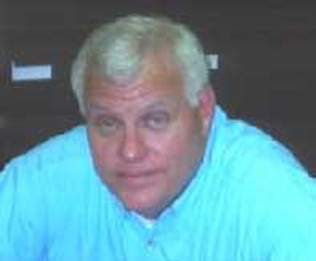
YAZOO CITY — Former Manchester Academy teacher Richard Darden is back in rehab today after turning himself in to authorities Thursday evening.
Yazoo County Sheriff Tommy Vaughan said Darden arrived at his office around 5 p.m. with his attorney. This morning, Darden made his initial court appearance in which Justice Court Judge Pam May set bond at $200,000, and Darden was ordered back into rehabilitation.
Once Darden finishes, the Sheriff's Department will place him in county jail under the bond. Vaughan said he did not know for how much longer Darden would need treatment.
"It sounded like it would be several weeks," he said. The sheriff would not say what specifically Darden is seeking treatment for other than an "addiction."
Darden's attorney, Cynthia Stewart, said her client "is innocent until proven guilty. All we have now is just allegations and many of them made in a lawsuit seeking money."
Vaughan said his investigators waited to take Darden into custody "because there were so many complaints filed we had to investigate each on independently and that takes time. We don't work on hearsay."
More than 100 students have come forward with allegations against Darden. Many are minors.
Investigator Dennis Moulder said he has yet to interview Darden because the suspect's attorney refused.
Investigators have been through Darden's house and have taken several items of evidence. Moulder also confirmed finding a room from where Darden may have watched students.
As for claims of abuse conducted at the school, Moulder said there is no firm evidence anything occurred at Manchester Academy.
Vaughan also said he is not investigating accusations against Darden made in the suit filed Wednesday in Yazoo County Circuit Court.
"I haven't seen it. I don't want to see it. I don't deal with civil. I deal with criminals," he said.
Clarion Ledger
Related Posts: Manchester teacher caught peeping refuses to turn himself in.
Students sue former Manchester Academy teacher accused of abuse
Harper Says Military not a "testing ground for social change"

“The Democratic leadership only allowed 10 minutes of debate on an amendment that will repeal a 17-year-old law. By repealing ‘Don’t Ask, Don’t Tell’ without a thorough review process, the majority is attempting to put the proverbial cart before the horse.
“Our men and women in uniform must be consulted to address the possible complications of implementing this controversial policy change. I agree with all four uniformed service chiefs who earlier this week sent letters strongly imploring Congress to defer any legislation repealing this regulation until the Department of Defense completes its review.
“At a time when our military is stretched thin fighting two wars, I do not believe we should consider policy changes of this magnitude. The United States military should not be used as a testing ground for social change.”
Harper vote on Defense Authorization
Whatchootalkin’bout, Willis? Gary Coleman Dead at 42

Diff’rent Strokes Actor Gary Coleman Dead at 42
Gary Coleman, 42, the diminutive Diff’rent Strokes actor and poster child for the latter-day troubles of kid stars, died Friday at a Provo, Utah hospital of a head injury caused by a fall
Time
We’re too broke to be this stupid

by Mark Steyn
Back in 2008, when I was fulminating against multiculturalism on a more or less weekly basis, a reader wrote to advise me to lighten up, on the grounds that “we’re rich enough to afford to be stupid.”
Two years later, we’re a lot less rich. In fact, many Western nations are, in any objective sense, insolvent. Hence last week’s column, on the EU’s decision to toss a trillion dollars into the great sucking maw of Greece’s public-sector kleptocracy. It no longer matters whether you’re intellectually in favour of European-style social democracy: simply as a practical matter, it’s unaffordable.
How did the Western world reach this point? Well, as my correspondent put it, we assumed that we were rich enough that we could afford to be stupid. In any advanced society, there will be a certain number of dysfunctional citizens either unable or unwilling to do what is necessary to support themselves and their dependents. What to do about such people? Ignore the problem? Attempt to fix it? The former nags at the liberal guilt complex, while the latter is way too much like hard work: the modern progressive has no urge to emulate those Victorian social reformers who tramped the streets of English provincial cities looking for fallen women to rescue. All he wants to do is ensure that the fallen women don’t fall anywhere near him.
So the easiest “solution” to the problem is to throw public money at it. You know how it is when you’re at the mall and someone rattles a collection box under your nose and you’re not sure where it’s going but it’s probably for Darfur or Rwanda or Hoogivsastan. Whatever. You’re dropping a buck or two in the tin for the privilege of not having to think about it. For the more ideologically committed, there’s always the awareness-raising rock concert: it’s something to do with Bono and debt forgiveness, whatever that means, but let’s face it, going to the park for eight hours of celebrity caterwauling beats having to wrap your head around Afro-Marxist economics. The modern welfare state operates on the same principle: since the Second World War, the hard-working middle classes have transferred historically unprecedented amounts of money to the unproductive sector in order not to have to think about it. But so what? We were rich enough that we could afford to be stupid.

By the way, where does the government get the money to fund all these immensely useful programs? According to a Fox News poll earlier this year, 65 per cent of Americans understand that the government gets its money from taxpayers, but 24 per cent think the government has “plenty of its own money without using taxpayer dollars.” You can hardly blame them for getting that impression in an age in which there is almost nothing the state won’t pay for. I confess I warmed to that much-mocked mayor in Doncaster, England, who announced a year or two back that he wanted to stop funding for the Gay Pride parade on the grounds that, if they’re so damn proud of it, why can’t they pay for it? He was actually making a rather profound point, but, as I recall, he was soon forced to back down. In Canada, almost every ethnocultural booster group is on the public teat. Outside Palestine House in Toronto the other week, the young Muslim men were caught on tape making explicitly eliminationist threats about Jews, but c’mon, everything else in Canada is taxpayer-funded, why not genocidal incitement? We’re rich enough that we can afford to be stupid.
It’s not so much the money as the stupidity, which massively expands under such generous subvention. When it emerged that President Barack Obama had appointed a Communist as his “green jobs czar,” I carelessly assumed it was the usual youthful “idealism”: no doubt Van Jones, the Communist Obama appointee in question, had been a utopian college student caught up in the spirit of ’68 and gone along for the ride. A passing phase. Soon grow out of it. But, in fact, Mr. Jones became a Communist in the mid-nineties, after the fall of the Soviet Union. He embraced Communism after even the commies had given up on it. Like the song says, he was commie after commie had ceased to be cool. On Fox News, Glenn Beck made a fuss about it. But the “mainstream” media thought this was frankly rather boorish, and something only uptight right-wing squares would do. I mean, what’s the big deal? True, everywhere it’s been implemented, Communism causes human misery—not to mention an estimated 150 million deaths. But it doesn’t make you persona non grata in the salons of the West. Quite the opposite. The Washington Post hailed the grizzled folkie Pete Seeger as America’s “best-loved commie”—which, unlike “America’s best-loved Nazi,” is quite a competitive title. Even so, why would you stick a commie in the White House and put him in charge of anything to do with jobs, even “green jobs”?
Well, because “green jobs” is just another of those rich-enough-to-be-stupid scams. The Spanish government pays over $800,000 for every “green job” on a solar-panel assembly line. This money is taken from real workers with real jobs at real businesses whose growth is being squashed to divert funds to endeavours that have no rationale other than their government subsidies—and which would collapse as soon as the subsidies end. Yet Tim Flannery, the Aussie climate-alarmist who chaired the Copenhagen racket, says we need to redouble our efforts. “We’re trying to act as a species,” he says, “to regulate the atmosphere.”
Er, “regulate the atmosphere”? Why not? We’re rich enough to be stupid with the very heavens.
In his book The Tyranny of Guilt: An Essay on Western Masochism (La tyrannie de la pénitence), the French writer Pascal Bruckner concludes by quoting Louis Bourdaloue, the celebrated Jesuit priest at the court of Louis XIV, who preached on the four kinds of conscience: 1) the good and peaceful; 2) the good and troubled; 3) the bad and troubled; 4) the bad and peaceful. The first is to be found in Heaven, the second in Purgatory, the third in Hell, and the fourth—the bad but peaceful conscience—sounds awfully like the prevailing condition of the West at twilight. We are remorseful to a fault—indeed, to others’ faults.
It’s not just long-ago sins like imperialism and colonialism and Eurocentric white male patriarchy and other fancies barely within living memory. Our very lifestyle demands penitence: Americans have easily accessible oil reserves, but it would be wrong to touch them, so poor old BP have to do the “environmentally responsible” thing and be out in the middle of the Gulf a mile underwater. If you’re rich enough to be that stupid, what won’t you subsidize? The top al-Qaeda recruiter in Britain, Abu Qatada, had 150,000 pounds in his bank account courtesy of the taxpayer before the comically misnamed Department for Work and Pensions decided to cut back his benefits.
The green jobs, the gay parades, the jihadist welfare queens, the Greek public sector unions, all have to be paid for by a shrinking base of contributing workers whose children and grandchildren will lead poorer and meaner lives because of the fecklessness of government. The social compact of the postwar era cannot hold. Across the developed world, a beleaguered middle class is beginning to understand that it’s no longer that rich. At some point, it will look at the sheer waste of government spending, the other shoe will drop, and it will decide that it no longer wishes to be that stupid.
Macleans
Was it a bribe? White House Used Bill Clinton to Ask Sestak to Drop Out of Race
White House attorneys say that Mr. Emanuel’s proposal was for an unpaid job, so it doesn't rise to the level of bribery.
Read more at The New York Times
WH used Clinton to make offer to Sestak
Representative Joe Sestak, with his wife, Susan, and daughter Alex, won the Democratic primary for the Pennsylvania Senate seat even though his opponent had the backing of President Obama and other Democratic party leaders. President Obama’s chief of staff used former President Bill Clinton as an intermediary to see if Representative Joe Sestak would drop out of a Senate primary if given a prominent, but unpaid, advisory position, people briefed on the matter said Friday.
Rahm Emanuel, the White House chief of staff, asked Mr. Clinton to explore the possibilities last summer, according to the briefed individuals, who insisted on anonymity to discuss the politically charged situation. Mr. Sestak said no and went on to win last week’s Pennsylvania Democratic primary against Senator Arlen Specter.
The White House did not offer Mr. Sestak a full-time paid position because Mr. Emanuel wanted him to stay in the House rather than risk losing his seat. Among the positions explored by the White House was an appointment to the President’s Intelligence Advisory Board, which provides independent oversight and advice the president. But White House officials discovered it would not work because Mr. Sestak could not serve on the board while still serving in Congress.
Mr. Sestak first mentioned publicly in February that he had been offered a job but provided no details, and the White House for three months has refused to discuss it, generating intense criticism from Republicans who accused it of trying to bribe a congressman and deep consternation among Democrats who called on the administration to answer questions.
Mr. Obama promised on Thursday to release an account of the matter, which White House lawyers have been drafting in recent days in consultation with Mr. Sestak’s brother, Richard, who runs his campaign. The White House plans to release its statement later on Friday. Until now, the White House has said publicly only that whatever conversations took place with Mr. Sestak were not inappropriate.
The office of Robert F. Bauer, the White House counsel, has concluded that Mr. Emanuel’s proposal did not violate laws prohibiting government employees from promising employment as a reward for political activity because the position being offered was unpaid. The office also found other examples of presidents offering positions to political allies to achieve political aims.
Mr. Emanuel was eager last summer to clear the way to this year’s Democratic Senate nomination for Mr. Specter, who had just left the Republican party to join the Democrats and bolster their majority in the Senate. Mr. Sestak, a retired admiral and two-term House member, was already planning a run.
In tapping Mr. Clinton as the go-between, Mr. Emanuel picked the party’s most prominent figure other than Mr. Obama and someone Mr. Sestak had worked for on the National Security Council staff in the 1990s. Mr. Sestak endorsed Hillary Rodham Clinton against Mr. Obama in the 2008 presidential primaries, and Mr. Clinton was one of the first to call to congratulate him on his Senate victory last week.
Read more at The New York Times
WH used Clinton to make offer to Sestak
YouCut: Gimmick or Good Idea? (Video)

The House GOP’s YouCut program is gimmicky, sure, but savvy, too.
In 2006, with a flashy, YouTube-mimicking cover, Time magazine declared you — “Yes, you,” they wrote — their Person of the Year. Frank Rich of the New York Times called it a “cover stunt,” one that revealed the dead-tree weekly’s “desperation” to “appear relevant and hip.”
House Republican whip Eric Cantor has been subject to similar eye-rolls from the Left for YouCut, his office’s anti-spending overture to plugged-in Americans. But while the program is a tad gimmicky, it’s also politically and technologically savvy.
Cantor debuted YouCut earlier this month. Its premise is simple: Each week, Americans can vote for their favorite of five potential spending cuts on the web (or via text message to 68398). Cantor works to bring the winner to the House floor. With one click, you can help to shape the House GOP agenda.
“It allows us to focus on out-of-control federal spending, the number-one issue for millions of Americans,” Cantor says. “For us, it is an unprecedented online project. So far, we’ve received over 500,000 votes. The response has exceeded all of our expectations.”
Some critics, such as economist Mark Lieberman of Fox Business Network, have criticized Cantor for “ceding” power to “Internet browsers” and ignoring the argument of Edmund Burke that legislators should be strong figures, not simply delegates who act according to the popular will. But YouCut is hardly the start of direct democracy in Washington. Instead, it is a way for the House GOP to prick the Pelosi machine, hand in hand with frustrated citizens.
“It is important for Republicans to demonstrate that we want to engage with the public,” Cantor says. “The public wants to participate. This country, and the rest of the world, is now communicating 24-7, so you have to embrace that; you can’t avoid it.” Every day, he adds, he becomes more involved with social-media tools such as YouTube, Facebook, and Twitter.
“YouCut’s focus like a laser on spending is why it has been wildly successful,” says David All, the founder of TechRepublican.com. “People are deeply interested in this, and there is a hunger out there to be involved and at the table. They want to know, and change, what’s happening in Congress. YouCut’s ability to adapt to the quick news cycle — a new winner and resolution every week — says a lot about where House Republicans are at.”
Not surprisingly, some Democrats have slammed YouCut. They seem quite nervous about the GOP out-hustling them in the wired arena. “First, this is not American Idol or Dancing with the Stars,” snapped Rep. Alcee Hastings (D., Fla.). “This is America’s legislature. For all we know, on YouCut, Osama bin Laden could be voting. Please know that a handful of organized, gotcha Republicans are not going to control this legislature.”
Read more at NRO
Mike Kent wants your help.
An open letter from Madison County Superintendent of Edcuation Mike Kent:
School Board Opposes Canton Apartments
I am sure that most of you are aware that the City of Canton Zoning Board is scheduled to hear a request from local developers on TUESDAY, JUNE 1 at 3:00 p.m. to rezone approximately 26 acres at the intersection of Old Jackson and Sowell Roads to allow for construction of 300 apartment units.
Although this area has been annexed into the city limits of Canton, there is case law from the Mississippi Supreme Court that distinguishes between city limit boundaries and school district boundaries. If apartments are built on this site, the Madison County School District will have the responsibility of educating children who reside there.
In recent years, all of the District’s planning, demographic studies, bond issues, etc. have been based upon numbers consistent with zoning regulations in Madison County which currently favor single family residences. With that as a rationale, the Madison County School District opposes the construction of apartment complexes and any other high density residential complexes.
We have attempted to gain permission to speak at the meeting on Tuesday, but have been told that the deadline to be placed on the agenda has passed and that we will not be allowed to address the zoning board about our concerns. This makes it all the more imperative that we have as many citizens as possible attend the meeting to show the board that we oppose this zoning request.
We will keep you updated on any new developments in this matter; but I strongly encourage you to plan to attend the zoning meeting on Tuesday, June 1 at 3:00 p.m. at the Canton City Hall.
Thanks for all you do to support our schools!
Mike
School Board Opposes Canton Apartments

Thursday, May 27, 2010
Obamacare’s Cooked Books and the “Doc Fix”

The Obama administration continues to insist (see this post from White House budget director Peter Orszag) that the recently enacted health-care law will reduce the federal budget deficit by $100 billion over ten years and by ten times that amount in the second decade of implementation. They cite the Congressional Budget Office’s cost estimate for the final legislation to back their claims.
And it is undeniably true that CBO says the legislation, as written, would reduce the federal budget deficit by $124 billion over ten years from the health-related provisions of the new law.
But that’s not whole story about Obamacare’s budgetary implications — not by a long shot.
For starters, CBO is not the only game in town. In the executive branch, the chief actuary of the Medicare program is supposed to provide the official health-care cost projections for the administration — at least he always has in the past. His cost estimate for the new health law differs in important ways from the one provided by CBO and calls into question every major contention the administration has advanced about the bill. The president says the legislation will slow the pace of rising costs; the actuary says it won’t. The president says people will get to keep their job-based plans if they want to; the actuary says 14 million people will lose their employer coverage, many of whom would certainly rather keep it than switch into an untested program. The president says the new law will improve the budget outlook; in so many words, the chief actuary says, don’t bet on it.
All of this helps explain why the president of the United States would be so sensitive about the release of the actuary’s official report that he would dispatch political subordinates to undermine it with the media.
It’s not the chief actuary’s assignment to provide estimates of non-Medicare-related tax provisions, so his cost projections for Obamacare do not capture all of the needed budget data to estimate the full impact on the budget deficit. But it’s possible to back into such a figure by using the Joint Tax Committee’s estimates for the tax provisions missing from the chief actuary’s report. When that is done, $50 billion of deficit reduction found in the CBO report is wiped out.
And that’s before the other gimmicks, double counting, and hidden costs are exposed and removed from the accounting, too.
For instance, this week House and Senate Democratic leaders are rushing to approve a massive, budget-busting, tax-and-spending bill. Among its many provisions is a three-year Medicare “doc fix,” which will effectively undo the scheduled 21 percent cut in Medicare physician fees set to go into effect in June. CBO says this version of the “doc fix” would add $65 billion to the budget deficit over 10 years. The entire bill would pile another $134 billion onto the national debt over the next decade.
If the Obama administration gets its way, this three-year physician-fee fix will eventually get extended again, and also without offsets. Over a full 10-year period, an unfinanced “doc fix” would add $250 to $400 billion to the budget deficit, depending on design and who is doing the cost projection (CBO or the actuary).
Administration officials and their outside enthusiasts (see here) say the Democratic Congress shouldn’t have to find offsets for the “doc fix” because everybody knows a fix needs to be enacted and therefore should go into the baseline. (By the way, the history of the sustainable growth rate [SGR] that Ezra Klein provides at the link above is a misleading one. The SGR was a replacement for a predecessor program that too had run off the rails — the so-called “Volume Performance Standard” enacted by a Democratic Congress in 1989.)
But supporting a “doc fix” is not the same as supporting an unfinanced one on a long-term or permanent basis. Not everybody in Congress is for running up more debt to pay for a permanent repeal of the scheduled fee cuts, which is why such a repeal has never been passed before. In the main, the previous administration and Congresses worked to find ways to prevent Medicare fee cuts while finding offsets to pay for it.
But that’s not the policy of the Obama administration. The truth is the president and his allies in Congress worked overtime to pull together every Medicare cut they could find — nearly $500 billion in all over ten years — and put them into the health law to pay for the massive entitlement expansion they so coveted. They could have used those cuts to pay for the “doc fix” if they had wanted to, as well as for a slightly less expansive health program. But that’s not what they did. That wasn’t their priority. They chose instead to break their agenda into multiple bills, and “pay for” the massive health entitlement (on paper) while claiming they shouldn’t have to find offsets for the “doc fix.” But it doesn’t matter to taxpayers if they enact their agenda in one, two, or ten pieces of legislation. The total cost is still the same. All of the supposed deficit reduction now claimed from the health-care law is more than wiped out by the Democrats’ insistent march to borrow and spend for Medicare physician fees.
And the games don’t end there. CBO’s cost estimate assumes $70 billion in deficit reduction from the so-called “CLASS Act.” This is the new voluntary long-term-care insurance program that hitched a ride on Obamacare because it too created the illusion of deficit reduction. People who sign up for the insurance must pay premiums for at least five years before they are eligible to draw benefits. By definition, then, at start-up and for several years thereafter, there will be a surplus in the program as new entrants pay premiums and very few people draw benefits. That’s the source of the $70 billion “savings.” But the premiums collected in the program’s early years will be needed very soon to pay actual claims. Not only that, but the new insurance program is so poorly designed it too will need a federal bailout. So this is far worse than a benign sleight of hand. The Democrats have created a budgetary monster even as they used misleading estimates to tout their budgetary virtue.
There is much more, of course. CBO’s cost projections don’t reflect the administrative costs required to micromanage the health system from the Department of Health and Human Services. The number of employers looking to dump their workers into subsidized insurance is almost certainly going to be much higher than either CBO or the chief actuary now projects. And the price inflation from the added demand of the newly entitled isn’t factored into any of the official cost projections.
We’ve seen this movie before. When the government creates a new entitlement, politicians lowball the costs to get the law passed, and then blame someone else when program costs soar. Witness Massachusetts. Most Americans are sensible enough to know already that’s what can be expected next with Obamacare.
Fix Health Care Policy
Health Care Reform
'Top kill' stops gulf oil leak for now, official says

Reporting from Houma, La. —Engineers have at least temporarily stopped the flow of oil and gas into the Gulf of Mexico from a gushing BP well, the federal government's top oil-spill commander, U.S. Coast Guard Adm. Thad Allen, said Thursday morning.
The "top kill" effort, launched Wednesday afternoon by industry and government engineers, had pumped enough drilling fluid to block oil and gas spewing from the well, Allen said. The pressure from the well was very low, he said, but persisting. The top kill effort is not complete, officials caution.
Once engineers had reduced the well pressure to zero, they were to begin pumping cement into the hole to entomb the well. To help in that effort, he said, engineers also were pumping some debris into the blowout preventer at the top of the well.
As of early Thursday morning, neither government nor BP officials had declared the effort a success yet, pending the completion of the cementing and sealing of the well.
Allen said one ship that was pumping fluid into the well had run out of the fluid, or "mud," and that a second ship was on the way. He said he was encouraged by the progress.
"We'll get this under control," he said.
Allen also said that, later Thursday, an interagency team would release a revised estimate of how much oil had flowed from the well into the gulf before the "top kill" effort began. The Coast Guard had estimated the flow at 5,000 barrels a day, but independent estimates suggested it was much higher, perhaps tens of thousands of barrels a day.
LA Times
Gulf Coast Oil Spill
Madison’s L-3 awarded $18M contract

In addition, this modification provides for aircraft intermediate maintenance services in support of Chief of Naval Air Training aircraft and transient aircraft at NAS Pensacola, Fla., and NAS Corpus Christi, Texas.
The estimated level of effort for this modification is 72,657 man-hours. Work will be performed in Pensacola, Fla. (75 percent), and Corpus Christi, Texas (25 percent), and is expected to be completed in September 2010. Contract funds will not expire at the end of the current fiscal year. The Naval Air Systems Command, Patuxent River, Md., is the contracting activity.
MBJ

Subscribe to:
Posts (Atom)