The Congressional Budget Office on Friday released its analysis of President Obama’s 2012 budget proposal and found it does less to rein in deficits and the debt than the administration had estimated.
CBO estimates Obama's plan would produce 10 years of deficits totaling $9.5 trillion. By 2021, it would increase the debt held by the public to 87 percent of gross domestic product.
The administration, using different methods, estimated budget deficits would total $7.2 trillion over the next 10 years under the 2012 budget. It forecast that total debt in 2021 would be 77 percent of GDP.

Showing posts with label Budget. Show all posts
Showing posts with label Budget. Show all posts
Friday, March 18, 2011

Wednesday, March 16, 2011
TEA Party wants it all and they want it now despite not being sure how to get it.
Bring on the Big Stuff, Republicans
Not even the craftiest incrementalism is going to cut it with tea party types. They're still mad as hell and now griping as much about GOP leaders as they did last year about Obama.
Where's the big stuff -- such as switching Medicare to a voucher system for private insurance and raising the retirement age for Social Security? Oh there it is, lurking backstage in the planning for next year's budget.
What about blasting entire agencies, like EPA, out of the water? Or defunding NPR? This is the sort of stuff that warms the cups of your tea parties.
High Noon in April
Republican chiefs on Capitol Hill get to crunch time in about a month, when the Treasury Department loses its borrowing authority if the debt ceiling is not raised. So far, GOP leaders have claimed they would not back more borrowing unless "meaningful" cuts are made.
An undefined standard like that allows plenty of running room to trim fat and call it meaningful -- except with tea party folks, who will accept nothing less than cutting bone.
Time is running out for Republicans who privately call themselves the party's "adults." They are facing a very public split with the kids.
Not even the craftiest incrementalism is going to cut it with tea party types. They're still mad as hell and now griping as much about GOP leaders as they did last year about Obama.
Where's the big stuff -- such as switching Medicare to a voucher system for private insurance and raising the retirement age for Social Security? Oh there it is, lurking backstage in the planning for next year's budget.
What about blasting entire agencies, like EPA, out of the water? Or defunding NPR? This is the sort of stuff that warms the cups of your tea parties.
High Noon in April
Republican chiefs on Capitol Hill get to crunch time in about a month, when the Treasury Department loses its borrowing authority if the debt ceiling is not raised. So far, GOP leaders have claimed they would not back more borrowing unless "meaningful" cuts are made.
An undefined standard like that allows plenty of running room to trim fat and call it meaningful -- except with tea party folks, who will accept nothing less than cutting bone.
Time is running out for Republicans who privately call themselves the party's "adults." They are facing a very public split with the kids.
Monday, November 8, 2010
Now in Power, G.O.P. Vows Cuts in State Budgets
Republicans who have taken over state capitols across the country are promising to respond to crippling budget deficits with an array of cuts, among them proposals to reduce public workers’ benefits in Wisconsin, scale back social services in Maine and sell off state liquor stores in Pennsylvania, endangering the jobs of thousands of state workers.
States face huge deficits, even after several grueling years of them, and just as billions of dollars in stimulus money from Washington is drying up.
With some of these new Republican state leaders having taken the possibility of tax increases off the table in their campaigns, deep cuts in state spending will be needed. These leaders, committed to smaller government, say that is the idea.
In some cases, that may mean not just greatly changing state policies on taxing and spending, but also loosening regulations facing businesses, restricting access to abortion and rights for illegal immigration, and, perhaps, slowing the Obama administration’s health care overhaul.
Republicans gained more than 690 seats in state legislatures (leaving them with numbers last seen more than 80 years ago), at least five more governor seats, and, perhaps most significant, across-the-board power in the legislatures and governor’s offices of at least 20 states — more than twice as many as before the election. Included in that group were Maine and Wisconsin, which the day before the election had been entirely in Democratic hands.
Read More: NYT
States face huge deficits, even after several grueling years of them, and just as billions of dollars in stimulus money from Washington is drying up.
With some of these new Republican state leaders having taken the possibility of tax increases off the table in their campaigns, deep cuts in state spending will be needed. These leaders, committed to smaller government, say that is the idea.
In some cases, that may mean not just greatly changing state policies on taxing and spending, but also loosening regulations facing businesses, restricting access to abortion and rights for illegal immigration, and, perhaps, slowing the Obama administration’s health care overhaul.
Republicans gained more than 690 seats in state legislatures (leaving them with numbers last seen more than 80 years ago), at least five more governor seats, and, perhaps most significant, across-the-board power in the legislatures and governor’s offices of at least 20 states — more than twice as many as before the election. Included in that group were Maine and Wisconsin, which the day before the election had been entirely in Democratic hands.
Read More: NYT
Tuesday, September 21, 2010
2 percent of Miss. teacher contracts not renewed

The state Department of Education says Mississippi schools cut about 2 percent of the jobs for certified teachers this academic year because of tight budgets.
That's a loss of about 705 jobs among the roughly 33,000 teaching positions.
State Board of Education member Claude Hartley told legislative budget writers Tuesday that losing teachers can mean larger class sizes, which can affect the quality of education.
The 705 job losses are for teachers whose contracts were not renewed.
The numbers don't include teaching jobs that are open because someone retired and a position wasn't filled.
The state Department of Education says 150 of the 152 school districts responded to its survey about employment levels. Agricultural high schools in Hinds and Coahoma counties did not respond.
SH
Wednesday, September 1, 2010
Auditor Pickering issues demand for $1.2 Million against former Jackson County Employee
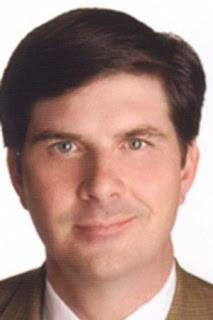 Former Jackson Co. clerk accused of stealing $890,000
A former Jackson County employee is charged with embezzling $890,000. The indictment against Ginger Lashley, 50, released Tuesday accuses her of using her position as a clerk to steal money from 2001 until November 2009 when she was fired and arrested.
The indictment alleges Lashley diverted county money into a personal savings account at a local bank. That account, entitled "Jackson County Food Drive," received regular deposits of county checks according to court papers.
Jackson County Sheriff Mike Byrd said bank officials became suspicious of the account in 2009 and alerted investigators. Byrd said the frequency and size of the deposits seemed suspect. He added there is no official county account for a "Jackson County Food Drive."
Lashley was first accused last year of stealing $125,000 of county money. However, as investigators dug deeper, the amount of money that disappeared from county coffers grew.
State Auditor Stacy Pickering said his office issued a demand against Lashley for $1,232,579.73, which includes the amount she is accused embezzling along with investigative costs.
"This is one of the largest embezzlement cases we've investigated by the State Auditor's Office and represents a significant loss to taxpayers of Jackson County," Pickering said.
Jackson County Board President Mike Mangum said since the investigation started, the County has implemented safe guards to prevent this type of activity from happening again.
"As public servants, we take this situation very seriously and understand our first responsibility is to be good stewards of the taxpayer's money," Mangum said.
Lashley began working for the county in 1998. Investigators say the embezzlement began in 2001 when Lashley was working in the Accounts Payable office.
WLOX

A former Jackson County employee is charged with embezzling $890,000. The indictment against Ginger Lashley, 50, released Tuesday accuses her of using her position as a clerk to steal money from 2001 until November 2009 when she was fired and arrested.
The indictment alleges Lashley diverted county money into a personal savings account at a local bank. That account, entitled "Jackson County Food Drive," received regular deposits of county checks according to court papers.
Jackson County Sheriff Mike Byrd said bank officials became suspicious of the account in 2009 and alerted investigators. Byrd said the frequency and size of the deposits seemed suspect. He added there is no official county account for a "Jackson County Food Drive."
Lashley was first accused last year of stealing $125,000 of county money. However, as investigators dug deeper, the amount of money that disappeared from county coffers grew.
State Auditor Stacy Pickering said his office issued a demand against Lashley for $1,232,579.73, which includes the amount she is accused embezzling along with investigative costs.
"This is one of the largest embezzlement cases we've investigated by the State Auditor's Office and represents a significant loss to taxpayers of Jackson County," Pickering said.
Jackson County Board President Mike Mangum said since the investigation started, the County has implemented safe guards to prevent this type of activity from happening again.
"As public servants, we take this situation very seriously and understand our first responsibility is to be good stewards of the taxpayer's money," Mangum said.
Lashley began working for the county in 1998. Investigators say the embezzlement began in 2001 when Lashley was working in the Accounts Payable office.
WLOX
Tuesday, June 22, 2010
Democrats Refuse To Produce A Budget For 2010, Harper Says Move Lacks Priorities
The Hill is reporting:
Mississippi Congressman Gregg Harper was not pleased with the announcement.
“The Democratic leadership in Washington has no budget for the federal government and this is because they are unwilling to take ownership of the massive budget gaps they have created," Harper said in a statement.
“Last year, the leadership spent $11,988 per household, money that we did not have. Now the President and the Democratic-led Congress continue to spend nearly $4.8 billion per day and our country has yet to see many optimistic shifts in unemployment.
"Taxpayers deserve a fiscally responsible budget that spends less, cuts taxes and reduces our national debt.”
House Democrats will not pass a budget blueprint in 2010, Majority Leader Steny Hoyer (D-Md.) will confirm in a speech on Tuesday.
But Hoyer will vow to crack down on government spending, saying Democrats will enforce spending limits that are lower than what President Barack Obama has called for.
In the scheduled address to the progressive think tank The Third Way, Hoyer will acknowledge that the lower chamber will do things differently this election year.
“It isn’t possible to debate and pass a realistic, long-term budget until we’ve considered the bipartisan commission’s deficit-reduction plan, which is expected in December,” according to Hoyer’s prepared remarks that were provided to The Hill.
The House has never failed to pass an annual budget resolution since the current budget rules were put into place in 1974. Hoyer this spring noted that the GOP-led Congress didn’t pass a final resolution in 1998, 2004 and 2006.
The House will put forth a “budget enforcement resolution” rather than a budget blueprint that looks beyond next year and calculates five or 10 years’ worth of deficit figures.
The House’s “enforcement” — or deeming — resolution will endorse the goals of the president’s fiscal commission and reiterate the commitment to vote on its recommendations after the midterm elections. And it will also set limits on discretionary spending “that require further cuts below the president’s budget,” according to the speech.
“This budget enforcement resolution will enforce fiscal discipline in the near term while the fiscal commission works on a long-term plan to get our country back to fiscal health,” Hoyer’s remarks state.

Mississippi Congressman Gregg Harper was not pleased with the announcement.
“The Democratic leadership in Washington has no budget for the federal government and this is because they are unwilling to take ownership of the massive budget gaps they have created," Harper said in a statement.
“Last year, the leadership spent $11,988 per household, money that we did not have. Now the President and the Democratic-led Congress continue to spend nearly $4.8 billion per day and our country has yet to see many optimistic shifts in unemployment.
"Taxpayers deserve a fiscally responsible budget that spends less, cuts taxes and reduces our national debt.”
Tuesday, June 1, 2010
Miss. revenues fall 12.6 percent short in May

Barbour said in a news release on Tuesday that May collections were 12.61 percent, or $51 million, below estimates. The governor said the figures show the state hasn't recovered from the national recession, but he has no plans for additional budget cuts at this time.
Barbour said last month was the worst month for Mississippi State Tax Commission collections since May 2009. Collections have been below estimates 20 out of the last 21 months.
Sun Herald
Friday, May 28, 2010
YouCut: Gimmick or Good Idea? (Video)

The House GOP’s YouCut program is gimmicky, sure, but savvy, too.
In 2006, with a flashy, YouTube-mimicking cover, Time magazine declared you — “Yes, you,” they wrote — their Person of the Year. Frank Rich of the New York Times called it a “cover stunt,” one that revealed the dead-tree weekly’s “desperation” to “appear relevant and hip.”
House Republican whip Eric Cantor has been subject to similar eye-rolls from the Left for YouCut, his office’s anti-spending overture to plugged-in Americans. But while the program is a tad gimmicky, it’s also politically and technologically savvy.
Cantor debuted YouCut earlier this month. Its premise is simple: Each week, Americans can vote for their favorite of five potential spending cuts on the web (or via text message to 68398). Cantor works to bring the winner to the House floor. With one click, you can help to shape the House GOP agenda.
“It allows us to focus on out-of-control federal spending, the number-one issue for millions of Americans,” Cantor says. “For us, it is an unprecedented online project. So far, we’ve received over 500,000 votes. The response has exceeded all of our expectations.”
Some critics, such as economist Mark Lieberman of Fox Business Network, have criticized Cantor for “ceding” power to “Internet browsers” and ignoring the argument of Edmund Burke that legislators should be strong figures, not simply delegates who act according to the popular will. But YouCut is hardly the start of direct democracy in Washington. Instead, it is a way for the House GOP to prick the Pelosi machine, hand in hand with frustrated citizens.
“It is important for Republicans to demonstrate that we want to engage with the public,” Cantor says. “The public wants to participate. This country, and the rest of the world, is now communicating 24-7, so you have to embrace that; you can’t avoid it.” Every day, he adds, he becomes more involved with social-media tools such as YouTube, Facebook, and Twitter.
“YouCut’s focus like a laser on spending is why it has been wildly successful,” says David All, the founder of TechRepublican.com. “People are deeply interested in this, and there is a hunger out there to be involved and at the table. They want to know, and change, what’s happening in Congress. YouCut’s ability to adapt to the quick news cycle — a new winner and resolution every week — says a lot about where House Republicans are at.”
Not surprisingly, some Democrats have slammed YouCut. They seem quite nervous about the GOP out-hustling them in the wired arena. “First, this is not American Idol or Dancing with the Stars,” snapped Rep. Alcee Hastings (D., Fla.). “This is America’s legislature. For all we know, on YouCut, Osama bin Laden could be voting. Please know that a handful of organized, gotcha Republicans are not going to control this legislature.”
Read more at NRO
Thursday, May 27, 2010
Obamacare’s Cooked Books and the “Doc Fix”

The Obama administration continues to insist (see this post from White House budget director Peter Orszag) that the recently enacted health-care law will reduce the federal budget deficit by $100 billion over ten years and by ten times that amount in the second decade of implementation. They cite the Congressional Budget Office’s cost estimate for the final legislation to back their claims.
And it is undeniably true that CBO says the legislation, as written, would reduce the federal budget deficit by $124 billion over ten years from the health-related provisions of the new law.
But that’s not whole story about Obamacare’s budgetary implications — not by a long shot.
For starters, CBO is not the only game in town. In the executive branch, the chief actuary of the Medicare program is supposed to provide the official health-care cost projections for the administration — at least he always has in the past. His cost estimate for the new health law differs in important ways from the one provided by CBO and calls into question every major contention the administration has advanced about the bill. The president says the legislation will slow the pace of rising costs; the actuary says it won’t. The president says people will get to keep their job-based plans if they want to; the actuary says 14 million people will lose their employer coverage, many of whom would certainly rather keep it than switch into an untested program. The president says the new law will improve the budget outlook; in so many words, the chief actuary says, don’t bet on it.
All of this helps explain why the president of the United States would be so sensitive about the release of the actuary’s official report that he would dispatch political subordinates to undermine it with the media.
It’s not the chief actuary’s assignment to provide estimates of non-Medicare-related tax provisions, so his cost projections for Obamacare do not capture all of the needed budget data to estimate the full impact on the budget deficit. But it’s possible to back into such a figure by using the Joint Tax Committee’s estimates for the tax provisions missing from the chief actuary’s report. When that is done, $50 billion of deficit reduction found in the CBO report is wiped out.
And that’s before the other gimmicks, double counting, and hidden costs are exposed and removed from the accounting, too.
For instance, this week House and Senate Democratic leaders are rushing to approve a massive, budget-busting, tax-and-spending bill. Among its many provisions is a three-year Medicare “doc fix,” which will effectively undo the scheduled 21 percent cut in Medicare physician fees set to go into effect in June. CBO says this version of the “doc fix” would add $65 billion to the budget deficit over 10 years. The entire bill would pile another $134 billion onto the national debt over the next decade.
If the Obama administration gets its way, this three-year physician-fee fix will eventually get extended again, and also without offsets. Over a full 10-year period, an unfinanced “doc fix” would add $250 to $400 billion to the budget deficit, depending on design and who is doing the cost projection (CBO or the actuary).
Administration officials and their outside enthusiasts (see here) say the Democratic Congress shouldn’t have to find offsets for the “doc fix” because everybody knows a fix needs to be enacted and therefore should go into the baseline. (By the way, the history of the sustainable growth rate [SGR] that Ezra Klein provides at the link above is a misleading one. The SGR was a replacement for a predecessor program that too had run off the rails — the so-called “Volume Performance Standard” enacted by a Democratic Congress in 1989.)
But supporting a “doc fix” is not the same as supporting an unfinanced one on a long-term or permanent basis. Not everybody in Congress is for running up more debt to pay for a permanent repeal of the scheduled fee cuts, which is why such a repeal has never been passed before. In the main, the previous administration and Congresses worked to find ways to prevent Medicare fee cuts while finding offsets to pay for it.
But that’s not the policy of the Obama administration. The truth is the president and his allies in Congress worked overtime to pull together every Medicare cut they could find — nearly $500 billion in all over ten years — and put them into the health law to pay for the massive entitlement expansion they so coveted. They could have used those cuts to pay for the “doc fix” if they had wanted to, as well as for a slightly less expansive health program. But that’s not what they did. That wasn’t their priority. They chose instead to break their agenda into multiple bills, and “pay for” the massive health entitlement (on paper) while claiming they shouldn’t have to find offsets for the “doc fix.” But it doesn’t matter to taxpayers if they enact their agenda in one, two, or ten pieces of legislation. The total cost is still the same. All of the supposed deficit reduction now claimed from the health-care law is more than wiped out by the Democrats’ insistent march to borrow and spend for Medicare physician fees.
And the games don’t end there. CBO’s cost estimate assumes $70 billion in deficit reduction from the so-called “CLASS Act.” This is the new voluntary long-term-care insurance program that hitched a ride on Obamacare because it too created the illusion of deficit reduction. People who sign up for the insurance must pay premiums for at least five years before they are eligible to draw benefits. By definition, then, at start-up and for several years thereafter, there will be a surplus in the program as new entrants pay premiums and very few people draw benefits. That’s the source of the $70 billion “savings.” But the premiums collected in the program’s early years will be needed very soon to pay actual claims. Not only that, but the new insurance program is so poorly designed it too will need a federal bailout. So this is far worse than a benign sleight of hand. The Democrats have created a budgetary monster even as they used misleading estimates to tout their budgetary virtue.
There is much more, of course. CBO’s cost projections don’t reflect the administrative costs required to micromanage the health system from the Department of Health and Human Services. The number of employers looking to dump their workers into subsidized insurance is almost certainly going to be much higher than either CBO or the chief actuary now projects. And the price inflation from the added demand of the newly entitled isn’t factored into any of the official cost projections.
We’ve seen this movie before. When the government creates a new entitlement, politicians lowball the costs to get the law passed, and then blame someone else when program costs soar. Witness Massachusetts. Most Americans are sensible enough to know already that’s what can be expected next with Obamacare.
Fix Health Care Policy
Health Care Reform
Tuesday, May 25, 2010
Monday, May 24, 2010
Healthcare Bait and Switch AKA Lying
The Obama Administration Now Admits Their Health Care Plan Will Lead To Rationing
Back when Obama was trying to convince Congress to destroy America's health care system in the name of expanding government and giving Democrats more power, his administration claimed that there would be no rationing under the program:
But now that they've forced it through, their tune has changed quite a bit:
Read the entire post at Right Wing News
Back when Obama was trying to convince Congress to destroy America's health care system in the name of expanding government and giving Democrats more power, his administration claimed that there would be no rationing under the program:
“No one here is talking about rationing,” said Peter Orszag, director of the White House Office for Management and Budget. “What we are talking about, look at the source of that 30 percent or so in potential efficiency gains in the health system are from unnecessary procedures, unnecessary days in hospital, unnecessary applications of technology and what have you.”
But now that they've forced it through, their tune has changed quite a bit:
Read the entire post at Right Wing News
Monday, May 10, 2010
Tuesday, April 13, 2010
Barbour to reveal his new Miss. budget blueprint

His announcement comes six days before legislators return to Jackson to finish writing a $5.5 billion state spending plan for the fiscal year that begins July 1.
Barbour released his initial budget in November, but lawmakers have rejected some of his ideas, including his proposal to merge the eight public universities into five.
Barbour spokesman Dan Turner says the Republican governor still wants lawmakers to be careful with the state's financial reserves and to give agency directors more flexibility in their individual budgets.
It's not clear how long it will take lawmakers to finish their budget talks.
Thursday, April 8, 2010
Expanding health coverage busted state budgets. Will it bust the federal budget too?
Peter Suderman
The Affordable Care Act—otherwise known as ObamaCare—isn't the first attempt to expand health insurance coverage in America. Before Washington passed its law, a number of states took smaller-scale cracks at the job—each of which proved far more expensive than planned. As the nation dives further into debt, the destabilizing fiscal effects of those programs don't bode well for how ObamaCare will shape the U.S. budget.
As spectacular failures go, it's hard to do worse than Tennessee. This early state attempt to dramatically increase health coverage, dubbed TennCare, started off promisingly. In 1994, the first year of its operation, the system added half a million new individuals to its rolls. Premiums were cheap—just $2.74 per month for people right above the poverty line—and liberal policy wonks loved it. The Urban Institute, for example, gave it good marks for "improving coverage of the uninsurable or high-risk individuals with very limited access to private coverage." At its peak, the program covered 1.4 million individuals—nearly a quarter of the state's population and more than any other state's Medicaid program—leaving just 6 percent of the state's population uninsured.
But those benefits came at a high price. By 2001, the system's costs were growing faster than the state budget. The drive to increase coverage had not been matched by the drive to control costs. Vivian Riefberg, a partner at consulting firm McKinsey & Company, described it as having "almost across the board, no limits on scope and duration of coverage." Spending on drug coverage, in particular, had gone out of control: The state topped the nation in prescription drug use, and the program put no cap on how many prescription drugs a patient could receive. The result was that, by 2004, TennCare's drug benefits cost the state more than its entire higher education program. Meanwhile, in 1998, the program was opened to individuals at twice the poverty level, even if they had access to employer-provided insurance.
In other words, the program's costs were uncontrolled and unsustainable. By 2004, the budget had jumped from $2.6 billion to $6.9 billion, and it accounted for a quarter of the state's appropriations. A McKinsey report projected that the program's costs could hit $12.8 billion by 2008, consuming 36 percent of state appropriations and 91 percent of new state tax revenues. On the question of the system's fiscal sustainability, the report concluded that, even if a number of planned reforms were implemented, the program would simply "not be financially viable."
Reason
The Affordable Care Act—otherwise known as ObamaCare—isn't the first attempt to expand health insurance coverage in America. Before Washington passed its law, a number of states took smaller-scale cracks at the job—each of which proved far more expensive than planned. As the nation dives further into debt, the destabilizing fiscal effects of those programs don't bode well for how ObamaCare will shape the U.S. budget.
As spectacular failures go, it's hard to do worse than Tennessee. This early state attempt to dramatically increase health coverage, dubbed TennCare, started off promisingly. In 1994, the first year of its operation, the system added half a million new individuals to its rolls. Premiums were cheap—just $2.74 per month for people right above the poverty line—and liberal policy wonks loved it. The Urban Institute, for example, gave it good marks for "improving coverage of the uninsurable or high-risk individuals with very limited access to private coverage." At its peak, the program covered 1.4 million individuals—nearly a quarter of the state's population and more than any other state's Medicaid program—leaving just 6 percent of the state's population uninsured.
But those benefits came at a high price. By 2001, the system's costs were growing faster than the state budget. The drive to increase coverage had not been matched by the drive to control costs. Vivian Riefberg, a partner at consulting firm McKinsey & Company, described it as having "almost across the board, no limits on scope and duration of coverage." Spending on drug coverage, in particular, had gone out of control: The state topped the nation in prescription drug use, and the program put no cap on how many prescription drugs a patient could receive. The result was that, by 2004, TennCare's drug benefits cost the state more than its entire higher education program. Meanwhile, in 1998, the program was opened to individuals at twice the poverty level, even if they had access to employer-provided insurance.
In other words, the program's costs were uncontrolled and unsustainable. By 2004, the budget had jumped from $2.6 billion to $6.9 billion, and it accounted for a quarter of the state's appropriations. A McKinsey report projected that the program's costs could hit $12.8 billion by 2008, consuming 36 percent of state appropriations and 91 percent of new state tax revenues. On the question of the system's fiscal sustainability, the report concluded that, even if a number of planned reforms were implemented, the program would simply "not be financially viable."
Reason
Friday, March 19, 2010
Madison Co. Supervisor Asks For Audit Of Engineer's Contracts . . . Again.

Madison County residents turned activists Frank Halford and Billy Redd were on the Gallo Radio Show Thursday morning to discuss the lack of answers coming from the Board of Supervisors. Supervisor DI Smith continues to take his calls for a procedural audit to the airwaves as often as possible. Meanwhile State Auditor Stacy Pickering is trying to steer as clear as possible as he positions himself for a run for higher office.
County Engineer Rudy Warnock, in true Democrat fashion, continues his non-answer answers and to play the "poor me" victim. Back in June he was quoted as saying he is the victim of politics.
"Everything that D.I. is alleging is totally false and slanderous,” Warnock said in June. “Every contract and invoice that I have submitted to Madison County has been reviewed by the administration and then approved by the Madison County Board of Supervisors."
Boo Hoo!
WAPT is reporting that a recent investigation begun by Madison Mayor Mary Hawkins-Butler has only served to bring up more troubling questions about Warnock's practices.
Hawkins-Butler said a six-month investigation has revealed that Warnock has been paying other contractors to perform his projects, which she said is not allowed without county permission. Butler said the subcontracting issue has been raised for months now, and it was most recently talked about at a board of supervisors meeting.
“Two member of the board of supervisors voted for Rudy Warnock to produce those subcontracts,” the mayor said. “Three voted ‘no,’ that he didn't have to produce it. If there's nothing wrong with them, produce the subcontracts and all of this will go away.”
In addition to the issue of subcontracting, Hawkins-Butler said the investigation notes $2 million in tax dollars was spent without question or concern from the board of supervisors.

Bad timing Rudy!
The investigation cited a conflict of interest where Warnock, serving as county engineer, designs and approves his own work - something the report says flies in the face of the Mississippi Board of Licensure's code of professional conduct.
Warnock, holding true to form, blamed it all on "political theater" orchestrated by Hawkins-Butler.
In a statement released by his attorney--did I mention Warnock was in the Bahamas--Dorsey R. Carson, Jr., of Jackson and reported by the Madison County Journal,
Warnock railed against Hawkins-Butler, calling McAfee no more than a "hired gun" and questioning the integrity of the report.
The report's author, Richard J. McAfee of Detroit-based PMA Consultants, said with limited documentation he found no illegal acts, but pointed to over $2 million in questionable spending by the county.
"This bears further investigation," McAfee said. "Any government in the business of serving the people need to have better checks and balances. There are so many inconsistencies it would make sense to perform a thorough audit."

“State and local governments in Mississippi spend billions of dollars in taxpayer money each year. As a fiscal conservative, I want to make sure that our tax dollars are spent with the integrity the taxpayers expect and deserve.”
We're waiting sir.
Thursday, March 11, 2010
If your into charts and analysis then try this
I'm a chart and graph kind of fellow. I'm a visual rememberer, guess I like the pretty colors. This Heritage Foundation analysis has plenty. But, it is also good if you look at books for more than pretty pictures.
November can't get here quick enough.
Obama Budget Raises Taxes and Doubles the National Debt
by Brian M. Riedl
Abstract: President Obama declared: "I didn't come here to pass our problems on to the next president or the next generation--I'm here to solve them." Yet rather than "solve" the runaway spending that is projected to cause historic deficits, the President's budget doubles down on it with trillions of dollars in new spending and taxes, culminating in a doubling of the national debt. Heritage Foundation economic policy expert Brian Riedl lays out how a $3 trillion tax hike and an additional $74,000 debt burden on every U.S. household will affect the country--and why Congress should reject President Obama's budget proposal.
When he released his new budget proposal on February 1, President Barack Obama asserted that the government "simply cannot continue to spend as if deficits don't have consequences; as if waste doesn't matter; as if the hard-earned tax dollars of the American people can be treated like Monopoly money; as if we can ignore this challenge for another generation."[1]
Yet the President's new budget does exactly that-- raising taxes by $3 trillion and federal spending by $1.6 trillion over the next ten years. If enacted, this budget would increase the 2010 deficit to more than $1.5 trillion, and leave a deficit of more than $1 trillion even after an assumed return to peace and prosperity. Overall, the President's budget would double the national debt over the next decade.[2]
President Obama's Budget
•Would permanently expand the federal government by 3 percent of gross domestic product (GDP) over 2007 pre-recession levels;
•Would raise taxes onall Americans by nearly $3 trillion over the next decade;
•Would raise taxes for 3.2 million small businesses and upper-income taxpayers by an average of $300,000 over the next decade;
•Would borrow 42 cents for each dollar spent in 2010;
•Would run a $1.6 trillion deficit in 2010--$143 billion higher than the recession-driven 2009 deficit;
•Would leave permanent deficits that top $1 trillion as late as 2020;
•Would dump an additional $74,000 per household of debt into the laps of our children and grandchildren; and
•Would double the publicly held national debt to over $18 trillion.
Source: Heritage Foundation calculations based on U.S. Office of Management and Budget, Budget of the United States Government, Fiscal Year 2011 (Washington, D.C.: U.S. Government Printing Office, 2010), pp. 146-179, Tables S-1 through S-14. Also includes the cost of House-passed cap-and-trade bill, which President Obama endorsed yet excluded from his budget tables.
Before the recession began, annual federal spending totaled $24,000 per household. President Obama would hike that spending above $36,000 per household by 2020--an inflation-adjusted $12,000-per-household expansion of government. (See Chart 1.) But even these steep tax increases would not finance all of this new spending: The President's budget would lead to trillions in new debt over the next decade. Read the rest of the article and see the graphs and charts at The Heritage Foundation.

November can't get here quick enough.
Schools may have to cut teachers
By STEVEN G. WATSON
Teachers and programs will have to be cut due to an anticipated $8 million shortfall in the upcoming budget year, Madison County school officials are saying.
Superintendent of Education Mike Kent this week called the district's budget situation "grim" and prepared county School Board members for some hard decisions as they prepare the 2010-2011 school year budget.
State revenues continue to plunge this fiscal year and projections are not good for 2010-2011. The state Tax Commission recently reported that February collections continued a pattern of decline for the 18th straight month, $33 million, or 12.39 percent below estimates.
So far this year state revenues are down about $458.5 million and expected to be even worse next year.
The School Board heard a preliminary budget proposal from Kent Monday which included cutting at least 20 teaching positions district wide, possible furloughs on days when students aren't attending school and a variety of cuts to current programs.
Kent said they've faced shortfalls over the last three years, but nothing like what is anticipated in the upcoming year.
Madison County Journal
Teachers and programs will have to be cut due to an anticipated $8 million shortfall in the upcoming budget year, Madison County school officials are saying.
Superintendent of Education Mike Kent this week called the district's budget situation "grim" and prepared county School Board members for some hard decisions as they prepare the 2010-2011 school year budget.
State revenues continue to plunge this fiscal year and projections are not good for 2010-2011. The state Tax Commission recently reported that February collections continued a pattern of decline for the 18th straight month, $33 million, or 12.39 percent below estimates.
So far this year state revenues are down about $458.5 million and expected to be even worse next year.
The School Board heard a preliminary budget proposal from Kent Monday which included cutting at least 20 teaching positions district wide, possible furloughs on days when students aren't attending school and a variety of cuts to current programs.
Kent said they've faced shortfalls over the last three years, but nothing like what is anticipated in the upcoming year.
Madison County Journal
Wednesday, March 10, 2010
Republicans double down on Democrats earmark move

Roll Call reports
House Republican leaders plan to call for an immediate, across-the-board earmark ban during a special meeting of the GOP Conference on Thursday, according to a draft of a joint leadership statement obtained by Roll Call.
Their proposed moratorium would include tax and tariff-related earmarks.
“We will support changing the official rules of the House Republican Conference to incorporate such a moratorium when a special conference meeting on the matter takes place Thursday,” the release said.
A majority of the Republican Conference must vote in favor of the proposal in order to change their internal rules. Republicans are scheduled to discuss the possibility of implementing the earmark ban at 3 p.m. Thursday in the Capitol Visitor Center.
Nicely played, gentlemen. Nicely played.
No Canton Balloon Festival or just a bunch of hot air?
The Clarion Ledger is reporting that the Canton Championship Hot Air Balloon Festival may not happen this summer due to budget constraints on the Madison County municipality.
Is it likely that Madison County might step in to help fund the event? I would say with the current makeup on the Board of Supervisors that is a possibility.
Some Board of Aldermen members on Tuesday appeared doubtful that the city could come up with the $30,000 or more parks and recreation officials say is needed to put on the four-day balloon race and fireworks event that draws tens of thousands of people to Canton each year for July 4 weekend.
The festival costs about $70,000 altogether, but sponsors and donors cover much of the price tag, said parks and recreation director Alvin Davis during the aldermen’s work session. Ridgeland has also helped with the expenses in years past in exchange for hot air balloons to use for its own annual Celebrate America Balloon Glow that takes place the same weekend as Canton’s festival.

Is it likely that Madison County might step in to help fund the event? I would say with the current makeup on the Board of Supervisors that is a possibility.
Is Greece the Future of America?
by Sheldon Richman
Future of Freedom Foundation
 It may be possible to look into America’s future. How? Watch what’s going on in Greece. According to the Washington Post, “Greece needs to raise about €23 billion [more than $31 billion] in April and May to pay debts coming due. Greek officials say that either is impossible, or would require punitive interest rates — making it harder to bring the budget under control — unless Europe helps out.” So the Greek government awaits a bailout from Germany and France, but first it has to impress them that it is serious about fiscal austerity.
The Greek welfare state’s annual deficit is about 13 percent of its GDP and its accumulated debt is 113 percent of GDP. Meanwhile, the U.S. government’s overall debt is now on track to reach 90 percent of GDP by 2020, more than $20 trillion. Just last week the Congressional Budget Office said that over the next decade, the annual budget deficit will be $1.2 trillion more than the Obama administration has guessed. The ten-year figure is now projected to be $9.76 trillion. The annual deficit is about 10 percent of GDP.
Government spending is rising — and the new entitlement called health-care “reform” hasn’t passed yet. That’ll be good for a couple of trillion over the next decade.
The economic consequences of all that are likely to be dire. As the government tries to borrow more money, both to finance its programs and to pay the old debt that’s coming due, it will have to promise a better return to nervous lenders, such as China. But raising the interest rate will push other borrowers’ rates up, which in turn will put a damper on economic activity. Unemployment will grow and revenues will shrink, but entitlement programs, such as Medicare and Social Security, will keep growing. They already face tens of trillions of dollars in unfunded liabilities and are heading toward bankruptcy. Military spending will also increase, along with most other government spending.
What will the politicians do when they find interest payments swallowing the budget, leaving them less and less money to shower on political supporters? They might resort to higher taxes, which would further dampen economic activity. They might get the Federal Reserve to monetize the debt through inflation; but that would wreak economic havoc. Politicians aren’t likely to cut spending because it would jeopardize their careers. At that point, the government might default on its debts, a step that has much to recommend it.
Thus, the welfare state is a fiscal failure.
The welfare state has long been presented as the viable “third way,” a happy medium between laissez faire — full separation of state and economy — and state socialism — government control of the economy. Advocates of individual liberty have emphasized that the welfare state violates freedom because government takes wealth from those who produce it and transfers it to favored groups. Defenders have responded that the welfare state embodies compassion: people with means give to those less fortunate. But forced transfers through government are not true compassion. A virtue like compassion requires free choice, but government gives you no choice. So the compassion of the welfare state is counterfeit. It’s more about distributing goodies at others’ expense to win votes for politicians.
Historically compassion had little to do with government programs for the poor and social insurance for the working and middle classes. Beginning as far back as Queen Elizabeth I poor laws were intended to control people who were potential sources of social strife; and social insurance beginning in Bismarck’s German welfare state was calculated to make working people dependent on the government. In both cases the free society was subdued for the sake of those in power.
Now it is clearer than ever that the welfare state is not only morally flawed, it is also fiscally unsustainable. Politicians will always have an incentive to spend, while hiding the costs or pushing them onto future generations through debt. But reality doesn’t go away. It comes back to bite in unexpected ways.
We’re seeing it in Greece today. Tomorrow it will be other European welfare states. Then, if nothing changes, it will be America’s turn.
Future of Freedom Foundation

The Greek welfare state’s annual deficit is about 13 percent of its GDP and its accumulated debt is 113 percent of GDP. Meanwhile, the U.S. government’s overall debt is now on track to reach 90 percent of GDP by 2020, more than $20 trillion. Just last week the Congressional Budget Office said that over the next decade, the annual budget deficit will be $1.2 trillion more than the Obama administration has guessed. The ten-year figure is now projected to be $9.76 trillion. The annual deficit is about 10 percent of GDP.
Government spending is rising — and the new entitlement called health-care “reform” hasn’t passed yet. That’ll be good for a couple of trillion over the next decade.
The economic consequences of all that are likely to be dire. As the government tries to borrow more money, both to finance its programs and to pay the old debt that’s coming due, it will have to promise a better return to nervous lenders, such as China. But raising the interest rate will push other borrowers’ rates up, which in turn will put a damper on economic activity. Unemployment will grow and revenues will shrink, but entitlement programs, such as Medicare and Social Security, will keep growing. They already face tens of trillions of dollars in unfunded liabilities and are heading toward bankruptcy. Military spending will also increase, along with most other government spending.
What will the politicians do when they find interest payments swallowing the budget, leaving them less and less money to shower on political supporters? They might resort to higher taxes, which would further dampen economic activity. They might get the Federal Reserve to monetize the debt through inflation; but that would wreak economic havoc. Politicians aren’t likely to cut spending because it would jeopardize their careers. At that point, the government might default on its debts, a step that has much to recommend it.
Thus, the welfare state is a fiscal failure.
The welfare state has long been presented as the viable “third way,” a happy medium between laissez faire — full separation of state and economy — and state socialism — government control of the economy. Advocates of individual liberty have emphasized that the welfare state violates freedom because government takes wealth from those who produce it and transfers it to favored groups. Defenders have responded that the welfare state embodies compassion: people with means give to those less fortunate. But forced transfers through government are not true compassion. A virtue like compassion requires free choice, but government gives you no choice. So the compassion of the welfare state is counterfeit. It’s more about distributing goodies at others’ expense to win votes for politicians.
Historically compassion had little to do with government programs for the poor and social insurance for the working and middle classes. Beginning as far back as Queen Elizabeth I poor laws were intended to control people who were potential sources of social strife; and social insurance beginning in Bismarck’s German welfare state was calculated to make working people dependent on the government. In both cases the free society was subdued for the sake of those in power.
Now it is clearer than ever that the welfare state is not only morally flawed, it is also fiscally unsustainable. Politicians will always have an incentive to spend, while hiding the costs or pushing them onto future generations through debt. But reality doesn’t go away. It comes back to bite in unexpected ways.
We’re seeing it in Greece today. Tomorrow it will be other European welfare states. Then, if nothing changes, it will be America’s turn.
Subscribe to:
Posts (Atom)